Free QR Photo Sharing for Multi-Venue City Weddings
Planning a wedding across multiple venues in one city? Learn how to collect every guest photo across venues with GuestDrop's Free Mode.

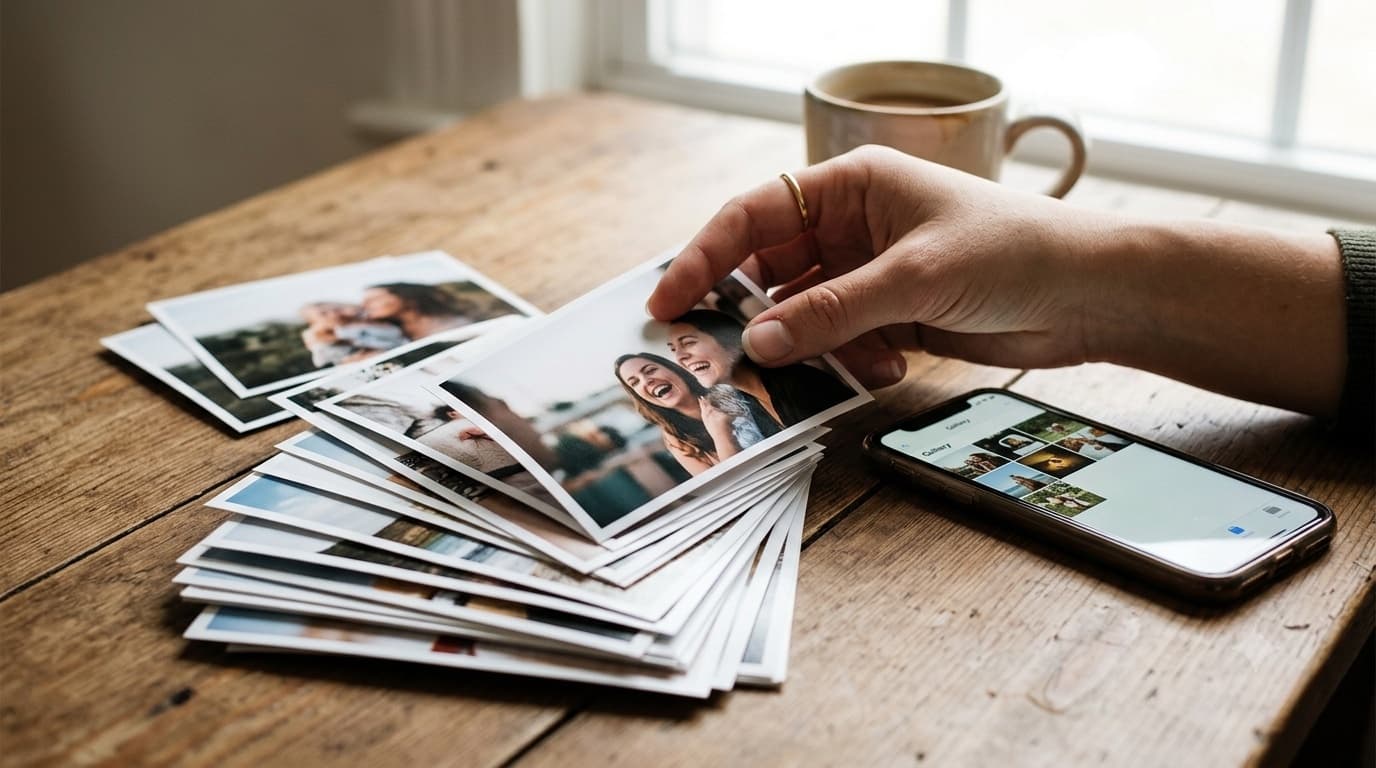
A wedding spread across several venues in the same city rarely happens in one place. In many regions, wedding season concentrates into a tight seasonal window around the auspicious dates, and a single wedding can move across four venues in a single weekend, the mehendi at home, the sangeet at a hotel, the wedding itself at a farmhouse, the reception across town. Guests follow the couple from venue to venue, and so do their phone cameras.
This guide is for a couple or family member trying to solve one specific problem: how do you collect every guest's photos from a wedding that never sits still, without asking anyone to install anything or pay for anything extra.
One wedding, four cities
Because the functions are spread across Delhi, Gurgaon and Noida, the photos end up spread out too. A cousin's shot from the sangeet dance floor sits on their phone. A friend's candid from the farmhouse lawn sits on theirs. By the time the reception wraps up, nobody remembers who has what, and half of it never leaves a WhatsApp thread. The practical consequence is one the usual advice skips entirely: guests arrive and leave at different times at every venue across the NCR, often an hour or more apart in evening traffic, so there is no single moment when the whole guest list is in one room to be told anything once. Whatever collects the photos has to work without a single announcement doing all the work.
The winter-season squeeze
The NCR wedding season concentrates into the November-to-February window around the auspicious dates, and that changes three things that matter for photo collection specifically. Vendors, printers and venues all run at capacity during this window, so print and shipping lead times stretch, and the event needs to be set up and the QR codes printed weeks ahead rather than the week before. Guests are also attending several weddings in a fortnight during peak season, so anything that asks for an app install or a new account gets skipped by the third invitation. And the light itself shifts: an early winter sunset combined with fog compresses usable outdoor light into a narrow window, which pushes the evening onto the floodlit stage and dance floor, exactly where guests are already standing with their phones out.
The farmhouse problem
Large farmhouse venues in the Chattarpur belt and around Westend Greens are built for guest lists in the several hundreds, and routinely well beyond that, spread across acres of open lawn with multiple bars, a stage, several photo backdrops and a separate dining area, plus a long valet-and-entry queue before anyone reaches the mandap. That is a property category, not a claim about any specific venue's exact capacity, amenities or layout, the point is what farmhouse venues of this kind are like as a category, and the consequence follows from the geometry rather than any one property. No single crew can be at the entrance, the stage and the far lawn all at once, so the frames from the other two places exist only on guest phones, and they stay there unless there is somewhere for those guests to actually send them.
What "free" actually means here
This is the section the usual wedding-planning advice skips, and it is the differentiator for this specific guide. Event creation is free: no per-guest charge, no per-venue charge, no subscription, and no charge for creating a second or third event if you want separate galleries for different functions. The consequence that matters for an NCR wedding specifically is that the things which usually scale the bill here, more guests, more venues, more days, do not scale this. Be honest about what still costs the host something: printing the physical cards, and room in the couple's own Google Drive if they want a copy there. Each event holds 10 GB of uploads free, and the gallery stays open free for 7 days after the event date. Paid options are one-time per event: a payment to keep one event's gallery open longer, which also raises it to 20 GB, and a +10 GB storage add-on for $19. Nothing is capped by guest count.
How the flow actually works
A guest scans the code, lands on a browser upload page, multi-selects photos and short videos, and uploads. The mechanism behind that matters at farmhouse scale: files go directly from the guest's browser to storage rather than through an intermediate server, so nothing is recompressed on the way and larger video files work without hitting a length cap. This matters on a farmhouse lawn where several hundred phones are contending for the same mobile data cells at once. A failed upload surfaces as a retryable state with a visible retry control rather than disappearing silently, and a partially completed batch reports which items landed and which did not, so a guest who drops a connection mid-upload finishes in one tap instead of starting from zero.
Mapping codes to every stop on the route
Treat each function as its own collection point rather than relying on one table sign to do all the work. A code by the entry table catches the relaxed, informal shots at the mehendi before the bigger functions begin. At the sangeet hotel in Gurgaon, place it at the lobby check-in and near the bar, where guests are already reaching for their phones between songs. At the Chattarpur farmhouse, print codes at both the dining tables and the entry gate, since the entry gate matters most here because of the valet crush, when guests are standing around with nothing to do but take photos. At the reception in Noida, a code at the entrance catches arrivals in their finest before the evening gets busy. Because one code maps to one event, the same artwork works at all four venues, so the whole print run is one file printed in volume rather than four separate designs.
Beyond the four functions, a few additional placements are worth the extra print run: the welcome hamper or room drop for out-of-town guests, who typically arrive a day early; the valet and entry queue at the farmhouse, since dead time in a queue is phone time; the dining tables; near the bar; and the digital itinerary or invite, so guests who never see a printed card still have the link. Print matte rather than glossy, large and high-contrast, and place it somewhere lit, NCR winter functions run cold and dark, and a card nobody can read stays in guests' pockets.
One gallery for the weekend, or one per function?
The mechanic is simple and worth stating once: one code equals one event equals one gallery, with everything landing in arrival order. If you want the mehendi kept separate from the reception, that is a separate event with its own code, and free mode means the second gallery costs nothing. Two settings are worth adjusting for a wedding at this scale before the first function starts. The per-guest photo limit is creator-controlled and sized for a normal-sized party by default, so raise it for a four-function weekend. The upload window should run well past the weekend itself, since NCR guests scatter back across the city and typically only sort their camera rolls days later, once the wedding-season rush has settled.
Conclusion
An NCR wedding is not one event, it is four, spread across a city where guests travel further and stay busier than almost anywhere else in the country. GuestDrop's free mode lets every function feed into the same gallery no matter how far apart the venues are; see our digital guestbook guide for the fundamentals of how that works. For the same structure applied to a wedding at even larger scale, see collecting memories at a big fat Indian wedding, and for the full function-by-function breakdown, our multi-day Indian wedding photo sharing guide covers it in depth. You can try the whole flow yourself, free, with our QR code generator before your event. Planning a city-to-coast celebration instead? Our guide to destination weddings with a getaway leg covers the same free approach there.
Frequently Asked Questions
Is GuestDrop actually free for a multi-venue wedding?
Yes. Event creation runs in a global free mode with no per-guest charge, no per-venue charge and no subscription, and creating a second or third event for separate galleries costs nothing too. Each event holds 10 GB of uploads free. The thing that still costs the couple something is printing the physical cards, plus room in their own Google Drive if they want a copy there.
How many QR codes do I need for a wedding that moves across multiple venues?
At least one per venue, and more at any large single venue. Because one code maps to one event, the same artwork works at the mehendi, the sangeet hotel, the farmhouse and the reception, so the whole print run is one file, the work is placing enough physical copies at each stop, not generating separate codes.
Will uploads work at a large farmhouse where hundreds of guests share the same network?
Yes. Files upload directly from each guest's browser to storage rather than through an intermediate server, so the platform is not a bottleneck hundreds of concurrent uploads squeeze through. If a single upload fails on a contended network, it surfaces as a retryable state with a visible retry control rather than disappearing silently.
Should each function have its own gallery, or should everything go into one?
One event covering the whole weekend is the right default, since one code equals one gallery and everything lands in arrival order, reading as the arc of the wedding. A separate event only makes sense if you want a function, such as the mehendi, kept out of the main gallery entirely, and a second event costs nothing under free mode.
Ready to simplify your event?
Set up your GuestDrop event in under a minute and start collecting every guest's photos today.
Create Your Event - Free